
Planning a term when you rent pool time
Most swim schools don't own their pool. Here is how to plan ten weeks of lessons around lanes you share with a club and the public.
On this page4 sections
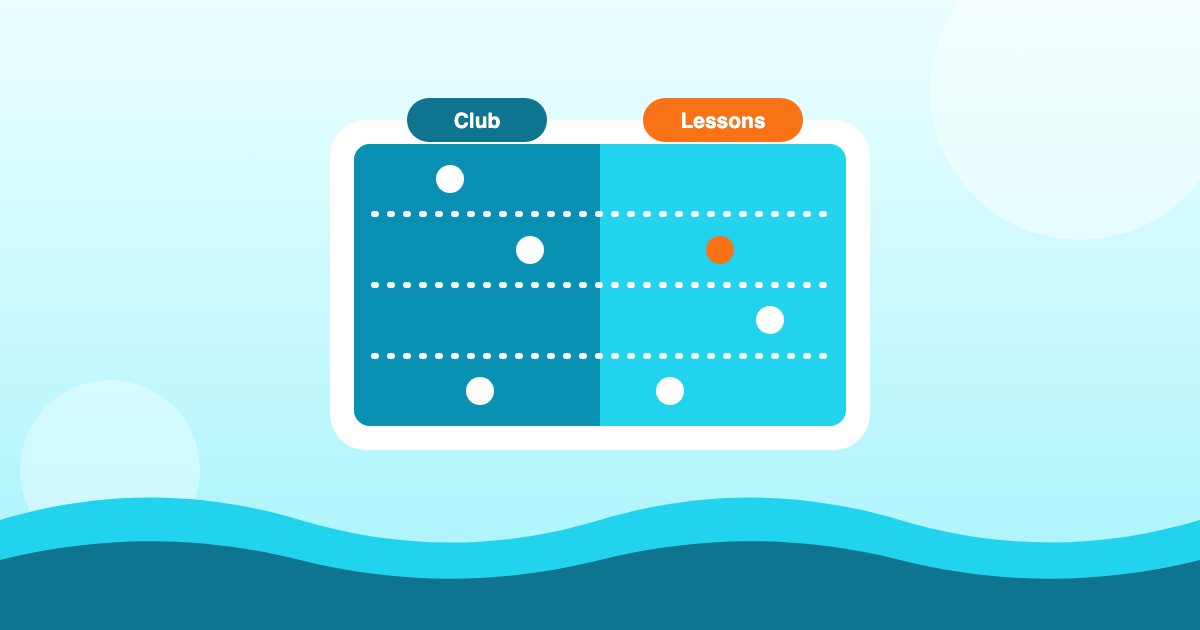
I ran my school out of a leisure centre for nine years. We had three lanes on weekday afternoons, the whole small pool on Saturday mornings, and nothing during school holidays. Planning a term was a puzzle I solved in a spreadsheet every quarter.
This is the process I wish I’d had, and the one Tidepool’s term planner is built around.
Start with the water, not the classes
Write down every block of pool time you have for the term before you think about classes. For each block, note the lanes, the depth and the water temperature. A 1.2 m lane at 29 °C is right for beginners. A 2 m lane at 27 °C is not.
Fit the levels to the blocks
Different setups call for different plans. These are the three I see most often:
Shared lanes
You rent two or three lanes next to public swimming. Put your older, stronger swimmers in the outside lanes and keep beginners away from the lane ropes nearest the public. Keep groups to 4 swimmers per instructor.
Whole teaching pool
You have the small pool to yourself. Run parent and baby classes first, while the water is warmest, then beginners. Split the pool with a floating rope rather than running one big group.
Early mornings only
You get the main pool from 6:00 to 7:30. This is where your squad and adult classes go. Children under 8 rarely do well before school.
Leave room for make-ups
Plan every group one swimmer under its limit. That spare spot is where make-up lessons go, and it saves you from opening an extra class in week six when half the school had a cold.
Publish late, confirm early
Send the timetable to parents two weeks before the term starts, not four. Pool operators change bookings more often than you’d like, and a timetable you have to change twice costs you more trust than one that arrives a little later.